
Skin Biopsy in Hawaii What to Expect After Your Kailua Visit
- Hawaiian Islands Dermatology Website

- Aug 14
- 6 min read
Your provider said, “let’s biopsy that.” No needles that hurt, no hospital trip. Fifteen minutes, and you walk out with a small bandage and answers on the way.
At Hawaiian Islands Dermatology in Kailua, Oahu, a skin biopsy is a routine office procedure. It is usually quick, simple, and done with local numbing medicine. The goal is clear: find out what a spot, bump, mole, rash, or sore really is.
This guide explains what happens during a biopsy, how to care for the area after, and when to call sooner.
What a Skin Biopsy Actually Is

A skin biopsy is a small tissue sample taken from the skin. That sample goes to a lab, where it is checked under a microscope by pathology.
A biopsy is not the treatment itself in most cases. It is the step that gives the diagnosis.
That matters because many skin problems can look alike. A brown spot may be harmless sun damage, an unusual mole, or skin cancer. A red patch may be eczema, psoriasis, infection, or something less common. Looking at the skin tells us a lot, but the lab gives the clearest answer.
If you searched for skin biopsy Hawaii because you were told you need one, the main point is this: a biopsy helps name the problem so the next step is right.
The Three Types of Skin Biopsies
Your provider chooses the biopsy type based on the size, depth, and location of the spot.
Shave biopsy
A shave biopsy removes the top layers of skin with a small blade. It is often used for raised spots, rough growths, or lesions that sit near the surface.
Most shave biopsies do not need stitches. You leave with a small bandage.
Punch biopsy
A punch biopsy uses a small round tool to take a deeper core of skin. Think of it like taking a tiny sample from the full thickness of the skin.
This may need one or two stitches. A punch biopsy can be useful for rashes, deeper spots, or lesions where the pattern under the skin matters.
Excisional biopsy
An excisional biopsy removes the whole visible lesion, usually with a small edge of normal skin around it. This is more involved than a shave or punch biopsy.
It often needs more stitches and a longer healing time. Your provider will explain why this type is being used if it is the best fit.
You may see terms online like “shave biopsy Kailua,” “punch biopsy Hawaii,” “skin biopsy healing,” or “dermatology biopsy Oahu.” The exact type matters less than choosing the right method for the spot being checked.
Why Yours Was Recommended
A biopsy is recommended when a skin finding needs a clear name.
Common reasons include:
Ruling out skin cancer
This includes basal cell carcinoma, squamous cell carcinoma, and melanoma.
Checking an changing or unusual mole
Changes in color, shape, size, or symptoms can make a biopsy the right next step.
Identifying an unknown rash
Some rashes need lab help, especially if they do not respond to usual treatment.
Choosing the right treatment
A firm diagnosis helps avoid guessing.
Every unclear lesion deserves a name. That does not mean every lesion is dangerous. It means the safest plan starts with knowing what it is.
What Happens During the Visit
A skin biopsy is done in the clinic. You stay awake the whole time.
First, the area is cleaned. Then your provider injects lidocaine, a numbing medicine, into the skin. You may feel a quick pinch or sting for a few seconds. After that, the area becomes numb.
The biopsy itself usually takes about 2 to 5 minutes. You may feel pressure or movement, but you should not feel sharp pain. If you do, tell your provider right away so more numbing medicine can be used.
Bleeding is controlled during the visit. Depending on the biopsy type, you may get stitches or a dressing. Then the area is covered with a bandage, and you get aftercare instructions before you leave.
Most people are surprised by how fast it is.
What to Expect After
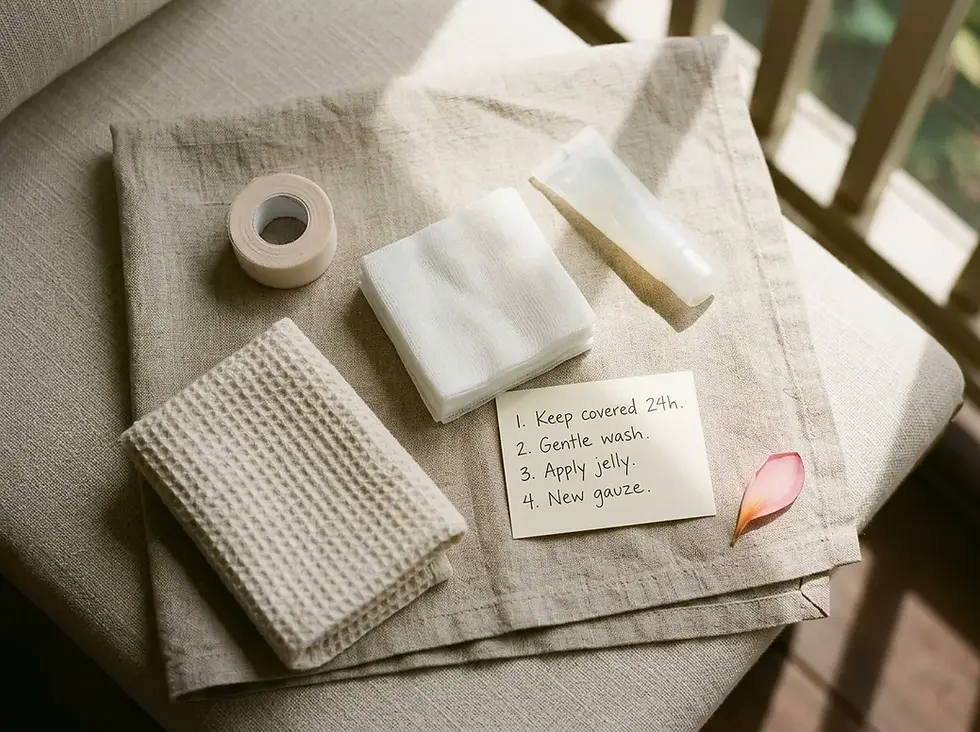
After a biopsy, you have a small, clean wound. It may look like a scrape, a small round opening, or a stitched line.
Healing can take days to weeks. That depends on:
The biopsy type
The size of the sample
Where it is on your body
Your skin type and overall health
How well the area is protected while it heals
In Hawaii, humidity, sweating, and ocean water can slow healing if the wound is not protected. Salt water may feel natural, but an open biopsy site needs time to seal first.
Keep the area dry and covered until your provider says otherwise. If you have stitches, you will be told when they should come out.
Some mild soreness, redness close to the wound, or light spotting on the bandage can be normal in the first day or two. The area should slowly improve, not get worse.
Aftercare at Home
Good aftercare helps the wound heal and lowers the chance of irritation or infection.
Follow the instructions from your visit. In general, biopsy care often includes:
Change the bandage once a day, or as directed.
Clean gently with mild soap and water when allowed.
Pat dry instead of rubbing.
Apply petroleum jelly to keep the wound moist.
Cover with a clean bandage.
Avoid picking at the scab or stitches.
Keep the wound moist with petroleum jelly unless your provider gives different instructions. A moist wound often heals better than a dry, cracked scab.
Avoid ocean water, pools, and hot tubs for 1 to 2 weeks, or until your provider clears you. This can be hard in Kailua, Oahu, but it is one of the best ways to protect the area while it closes.
Once the skin has healed, use a mineral sunscreen on the area when it is exposed. Freshly healed skin can darken faster in the sun.
Getting Results
Biopsy results often come back in 5 to 14 days. Sometimes they return sooner. Sometimes they take longer if the lab needs extra testing.
Your provider will call with the results and explain what they mean in plain language.
The result may be benign, which means no further treatment is needed beyond healing and routine follow-up. It may show a skin cancer or another condition that needs treatment. If that happens, the next step is based on the exact diagnosis, size, depth, and location.
The biopsy is what turns uncertainty into a plan.
When to Call Sooner
Call the clinic sooner if something does not feel right.
Reasons to call include:
Pain that is getting worse instead of better
Fever
Bleeding that does not stop with steady pressure
Redness that spreads away from the wound
Warmth, swelling, or drainage that is increasing
Stitches that come loose early
A small amount of redness right at the edge can be normal. Spreading redness or worsening pain should be checked.
If bleeding happens, apply firm, steady pressure with clean gauze for several minutes without peeking. If it still will not stop, call for guidance.
A Local Note for Kailua, Oahu
Biopsies are common in Hawaii. Sun exposure, outdoor work, surfing, paddling, hiking, gardening, and beach time all add up over the years.
That does not mean every spot is serious. It means your skin gets a lot of life here, and some spots deserve a closer look.
Earlier answers often mean smaller fixes. A spot found early may need less treatment than one that has been growing for months or years.
At Hawaiian Islands Dermatology in Kailua, Oahu, Doug Williams, MPAS, PA-C provides medical dermatology care for concerns like changing moles, rough spots, rashes, and lesions that need biopsy.
If you have a spot that needs to be checked, you can book a Kailua dermatology visit here.
FAQ
Does a skin biopsy hurt?
You may feel a quick pinch or sting from the numbing injection. After the area is numb, you should feel pressure, not sharp pain.
Can I go back to work after a biopsy?
Most people can return to normal light activity the same day. If the biopsy is in an area that rubs, stretches, or sweats a lot, your provider may give extra limits.
Can I swim after a skin biopsy?
Do not swim in the ocean, a pool, or a hot tub until your provider says it is okay. For many people, that means avoiding water submersion for 1 to 2 weeks.
Will I have a scar?
Any biopsy can leave a mark, but careful wound care can help it heal as well as possible. The final look depends on the biopsy type, location, skin type, and healing.
What if my biopsy shows skin cancer?
Your provider will explain the exact type and the next step. Some spots need a simple in-office treatment, while others may need a more detailed removal or referral.
A skin biopsy is a small step that gives important answers. You leave with a bandage, clear care instructions, and a plan for what comes next.


Comments